

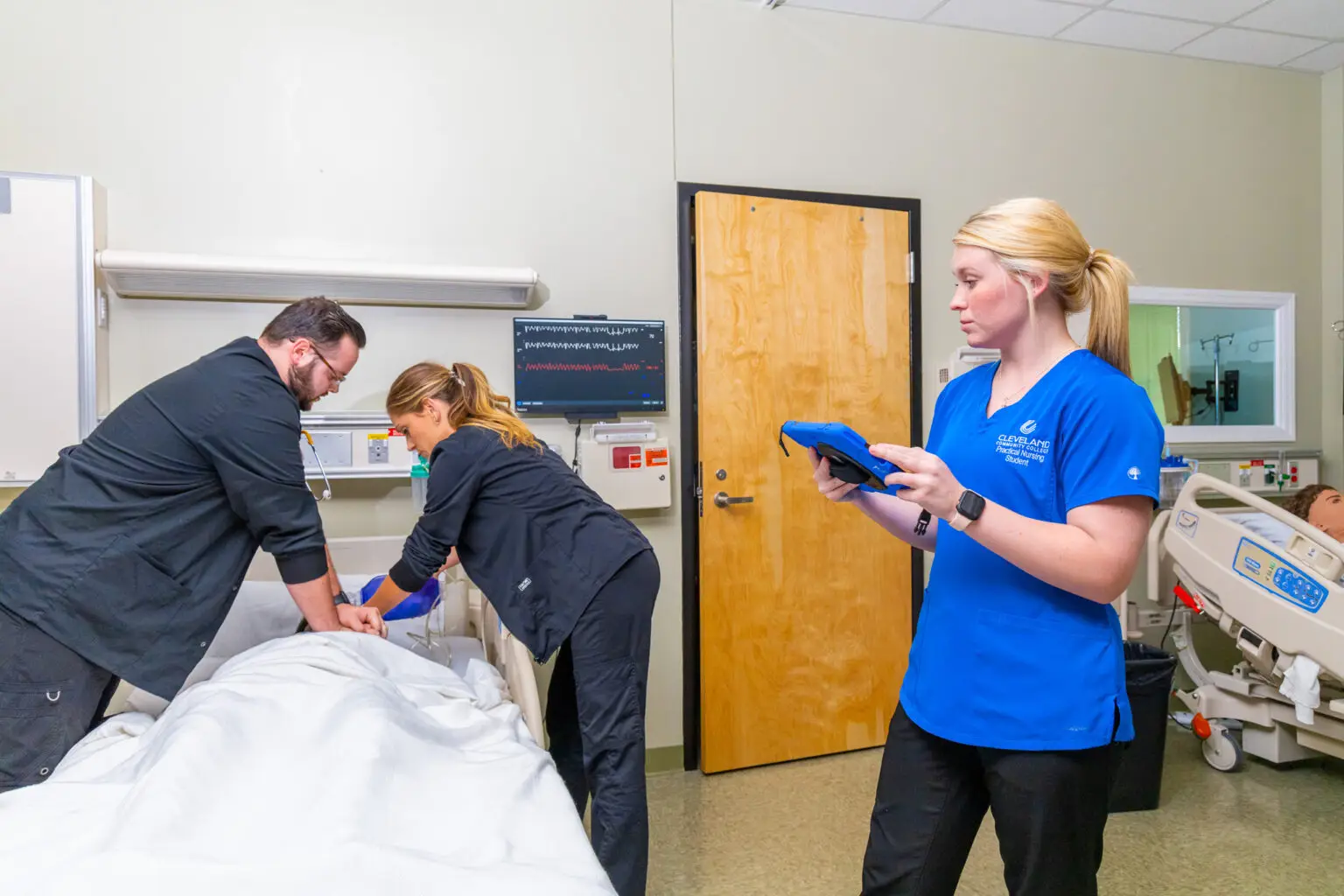
Across North Carolina, healthcare providers are facing critical staffing shortages. In 2025 the Golden LEAF Board of Directors awarded eight community colleges more than $4.1 million total to expand healthcare training capacity and prepare students for in-demand careers to help address these challenges. Funds were used to support expanding training capacity, modernizing facilities, strengthening career pathways, and connecting students directly to high-demand careers.
This Golden LEAF funding supports healthcare workforce programs at Beaufort County Community College, Cleveland Community College, College of the Albemarle, Fayetteville Technical Community College, Gaston College, Isothermal Community College, McDowell Technical Community College, and Sampson Community College.
While each program addresses unique local needs, together they reflect a broader statewide strategy: helping rural, economically distressed communities build the workforce infrastructure necessary to support long-term economic growth and stronger regional healthcare systems.
Golden LEAF helped fund Beaufort County Community College’s expansion of its healthcare simulation lab to help address regional demand for qualified healthcare professionals by increasing hands-on training capacity for nursing students. The Lisa Long Nursing Simulation Lab is helping the college to significantly increase the number of graduates in its LPN and ADN programs using modern simulation equipment that mirrors real-world healthcare environments.
“This simulation lab will transform how we prepare future nurses in clinical settings,” said Dr. David Loope, President of Beaufort CCC. “The Lisa Long Nursing Simulation Lab expands our capacity to educate and retain nursing students, ensuring more graduates are ready to fill critical healthcare roles across our region.”
These healthcare workforce programs span multiple regions of North Carolina and support training in nursing, cardiovascular technology, medical assisting, surgical technology, and nurse aide. Several initiatives also establish healthcare academies and dual-enrollment opportunities designed to introduce middle and high school students to healthcare professions earlier.
Gaston College established the Lincoln County Health Academy through a partnership with Lincoln County Schools and Atrium Health Lincoln to help address growing regional demand for healthcare professionals. The academy will create career tracks in healthcare, EMT/paramedic medicine, and practical nursing, preparing students to earn industry credentials and enter essential healthcare professions.
At Fayetteville Technical Community College, a new Cardiovascular Technology program will help prepare specialized cardiovascular care professionals using advanced hands-on clinical training technology and diagnostic equipment and supports counties throughout the region.
“The funding from Golden LEAF will enable Fayetteville Tech to meet an urgent regional workforce need locally and partner with community colleges in the rural areas of our region to extend critical healthcare training to Bladen, Hoke, Robeson and Moore counties,” said Fayetteville Technical Community College President Dr. Mark Sorrells. “Through TEACH, we will give students cutting-edge cardiovascular training while positively impacting the healthcare systems that serve the Sandhills Region.”
The funded community college healthcare workforce programs focus on expanding simulation labs, increasing credential attainment, and/or creating partnerships among community colleges, K-12 school systems, universities, healthcare providers, and/or local governments. The approach recognizes that solving healthcare workforce shortages requires long-term collaboration among education, healthcare, and community partners.
Golden LEAF’s investment in healthcare workforce training will help communities not only meet immediate staffing needs but also create sustainable talent pipelines into high-demand careers that strengthen local economies and improve quality of life.