

As North Carolina agriculture faces workforce shortages and an aging labor force, educational institutions are working together to create stronger pathways from high school classrooms to agricultural careers.
The University of Mount Olive (UMO) has developed a network of agricultural academies that allow high school students to earn college credit, explore career options and gain hands-on experience before graduation. Through partnerships with public schools, private schools and community colleges, the program helps students move seamlessly from education into the workforce.
“We don’t use a one-size-fits-all model,” said Dr. Edward Olive, Dean of UMO’s House of Raeford Farms School of Agriculture and Biological Sciences. “Each academy is tailored to the needs of the students and community it serves.”
UMO currently partners with schools including South Johnston High School, Northeast Regional School of Biotechnology and Agriscience, Northeast Carolina Prep, Providence Grove High School and Harrells Christian Academy. Students take the same college-level agricultural courses offered on UMO’s campus while remaining at their high schools.
The Golden LEAF Board of Directors has supported several of UMO’s agriculture programs, including most recently $500,000 for the Shady Grove Educational Livestock Facility. The training facility is integrated with agriculture academies, prepares students to pursue advanced degrees in animal- and agriculture-related fields, and includes a special focus on “precision agriculture” as it relates to both crop and animal production.
“Our courses have the same rigor and content students receive at the University of Mount Olive,” said Dr. Jason Davis, Director of Agricultural Programs and Outreach at UMO. “The only difference is that the instruction is taking place at the high school.”
Students can earn college credits, agricultural certificates and, in some cases, associate degrees before receiving their high school diplomas. They also gain exposure to college expectations while exploring careers in animal science, agricultural mechanics, horticulture and environmental science.
The academies work alongside community college partners across eastern North Carolina, including Sampson Community College, James Sprunt Community College and others. Students often complete general education courses through community colleges while taking specialized agricultural coursework through UMO, creating a flexible pathway toward certificates, associate degrees and bachelor’s degrees.
“We have a good relationship with our community colleges,” Davis said. “The goal is to make sure students can maximize the credits they earn and continue moving forward in their education.”
One example of this approach can be found at Harrells Christian Academy in Sampson County.
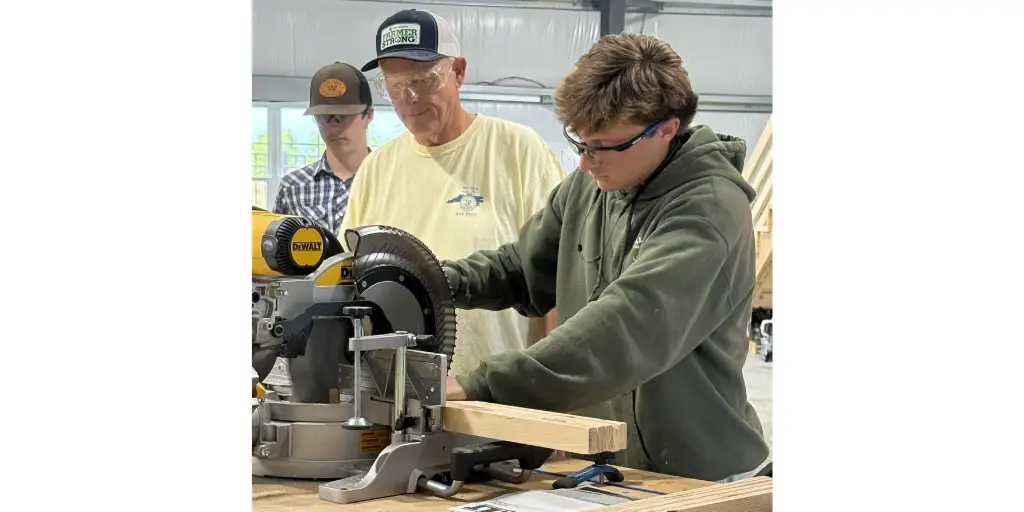
Serving students from several agriculture-rich counties, Harrells recently expanded its agricultural education offerings through a new hands-on learning facility. Students can explore animal science, welding, electrical work, small-engine repair and other agricultural mechanics programs while also accessing dual-enrollment opportunities through both community colleges and UMO.
“Our founding families were all agriculture-based families, and a large percentage of our students still come from agricultural backgrounds,” said Lindsay Matthews, Agricultural Education Director at Harrells Christian Academy.
The school’s partnership with UMO allows students to participate in college-level courses while gaining practical experience that connects directly to local workforce needs.
“We’re seeing students explore careers earlier and figure out what they enjoy before they invest years in a college program,” Matthews said. “That exposure helps them make better decisions about their future.”
Hands-on learning remains a key part of the academy model. Students participate in field experiences, industry tours and laboratory activities that connect classroom concepts to real-world careers.
The academy just finished constructing a new agricultural education facility. The Golden LEAF Board of Directors awarded $350,000 to Harrells Christian Academy for construction and equipment for the facility which will lead to third-party certifications or credentials, associates degrees, and four-year degrees in agriculture programs.
“We’re always looking for ways to take what students learn and apply it in a real-world setting,” Davis said. “That’s where everything comes full circle.”
The facility comes at a critical time for agriculture and agribusiness employers, many of whom report difficulty finding qualified workers.
“The industries are reporting an aging workforce,” said David Wells, head of school at Harrells Christian Academy. “This programming is helping fill a gap they’re currently experiencing.”
For UMO and its educational partners, the goal extends beyond earning college credits. The focus is on building a workforce pipeline that keeps talented students engaged in agriculture while creating opportunities in the rural communities they call home.
“We want students to realize college is possible and that there are opportunities for them right here in eastern North Carolina,” Olive said.
By connecting high schools, community colleges, universities and industry partners, programs like these are helping prepare the next generation of agricultural leaders while strengthening one of North Carolina’s most important industries.