

By Kaitlyn Parker, External Affairs Intern
Stanly Community College is expanding its plumbing and electrical programs to address the region’s labor shortage in high-demand trades.
“The expansion was in response to a labor shortage identified by the Stanly County Home Builders Association,” said Dr. Jeff Parsons, Stanly Community College Vice President of Academic Affairs and Chief Academic Officer. “The data showed that in the region around us, over a quarter of electricians and a quarter of plumbers were already 55 or older. That’s a massive retirement risk. We also found that the demand was significant in terms of job posting activity. With skilled electricians, our region was 46 percent greater than the national average, and plumbing was similar, at 45 percent higher than the national average.”
The Golden LEAF Board awarded $375,000 to support the launch of a new Plumbing program and to expand a recently established Electrical Systems Technology program, providing students with hands-on training aligned with industry needs. Stanly Community College students will earn academic and industry/third-party certifications. Funding supported one year of salaries for full-time plumbing and electrical instructors, along with instructional hardware and equipment.
By investing in students today, Stanly Community College is helping prepare for future growth in the plumbing and electrical trades that is expected to take place over the next decade.
“Graduates of these pathways are qualified for entry-level jobs in construction and trades, whether it’s for local contractors or even for government organizations,” said Dr. Parsons. “We received letters of support for the program from approximately seven local contractors, the local school system, NCWorks, and Habitat for Humanity, among others.”
A new campus building houses the manufacturing and trades programs, bringing those students closer to the rest of campus and creating a better environment for student success.
“The new building carves out space for construction, electrical, and plumbing,” said Dr. Parsons. “Originally, our manufacturing and trades programs were geographically separated from the rest of campus, so it was an effort for students to overcome the geographic barrier of an extremely steep hill to visit the rest of campus, socialize, and utilize campus resources. We’ve actually heard students say after moving into the new facility, ‘Wow, I actually feel like a college student now.’ It’s really the location of the building in connection with the rest of our campus that helps provide a holistic student success environment for all of our students.”
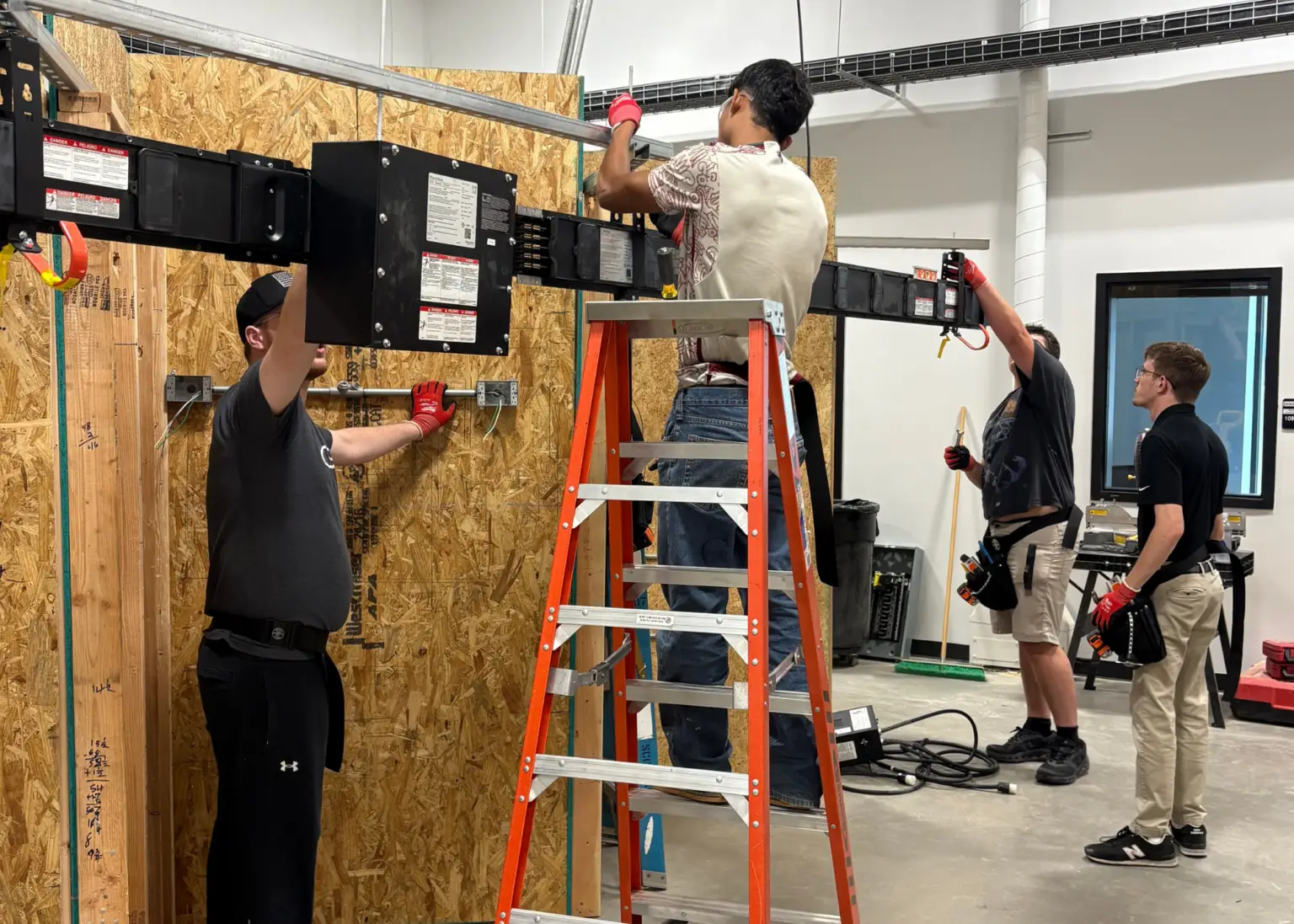
The programs are designed to be hands-on and give students the experience and exposure necessary to enter high-demand trades.
“These are very hands-on, tactile programs where students spend a lot of time in the lab,” said Dr. Parsons. “Having the ability to do that in a way that meets their needs means that when they walk out of here with their diploma and go to work, they feel ready, and their employers feel that they’re ready.”
Stanly Community College has created an environment where students and employers can engage with each other and build relationships that can lead to future career opportunities.
“The expansion and addition of our trades programs have opened doors for Stanly Community College with local employers and created engagement opportunities for our students,” said Candice Lowder, Stanly Community College Associate Vice President of Career Connections. “We have programs that align with local business needs. Through Stanly Community College Career Connect, a program that focuses on connecting students with employers, we’ve deepened internship and work-based learning opportunities over the last academic year. Students are able to engage with employers, participate in career fairs and outreach events, and listen to guest speakers. We’re really moving the needle with our outreach, bringing employers in to engage with students early on so they’re comfortable when they move into the workforce.”
One of the biggest challenges Stanly Community College faced while developing the programs was finding the right instructors for its plumbing and electrical classes.
“We overcame the staffing hurdle with patience,” said Dr. Parsons. “We didn’t just want an instructor—we wanted a great instructor, someone who had experience in the field. The electrical program was launched in fall 2025, and it wasn’t until February 2026 that we were able to hire our full-time instructor. Plumbing took a little longer, and we just hired our instructor in late summer. The initial classes were taught by credentialed individuals who were also handling building construction. Now, we’re planning a soft launch of the plumbing program this fall.”
For other institutions looking to establish similar programs, Dr. Parsons’ advice is to be patient when it comes to finding qualified instructors with the right industry experience.
Stanly Community College has been successful with establishing these programs. The college also established dual-enrollment pathways at Albemarle High School and South Stanly High School to prepare students for high-demand technology careers. Through a partnership between Stanly Community College and Stanly County Schools, students will have access to engineering technology and information technology courses while still in high school.
The goal is to create a clear pathway from high school to college and ultimately employment. Students in these programs have the opportunity to earn industry-recognized credentials, participate in work-based learning and pre-apprenticeships, continue into related associate degree programs at Stanly Community College, and participate in registered apprenticeships, and ultimately gain full-time employment.
Learn more about the Golden LEAF-funded dual-enrollment programs in the latest Golden LEAF Critical Conversations focused on apprenticeships.
With growing demand for skilled workers, the expanded programs at Stanly Community College are creating new opportunities for students to enter high-demand careers. Hands-on training, new facilities, and partnerships with local employers and school systems are helping students gain the skills and experience they need to enter the workforce prepared for success.